
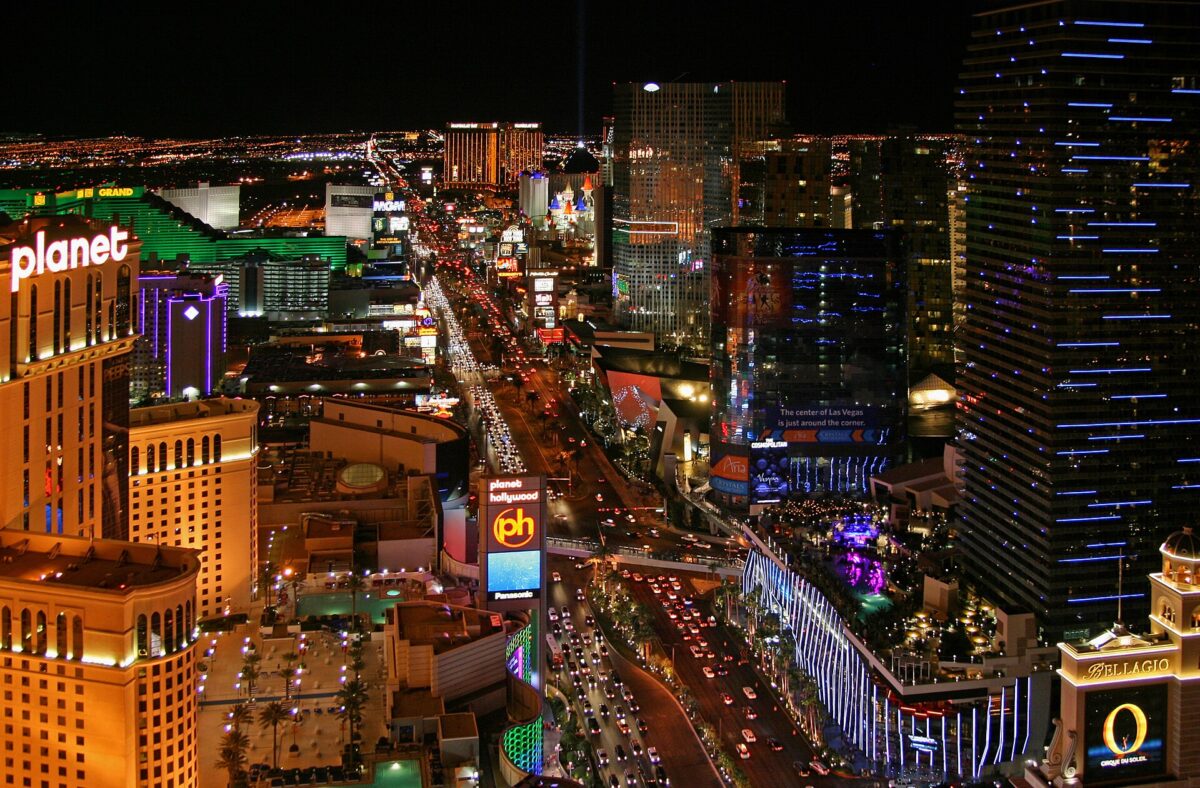
Most people assume prostitution is legal in Las Vegas.
It’s an understandable assumption. Las Vegas is famous for casinos, world-class entertainment, and a reputation for pushing boundaries. Nevada is also the only state where licensed brothels are legal in some counties. Put those two facts together, and it’s easy to conclude that legal brothels must be part of the Las Vegas experience.
They aren’t.
Licensed brothels cannot legally operate anywhere in Clark County, including Las Vegas. The reason isn’t a quirk of city government or an oversight in state law. It’s the result of more than a century of Nevada history, shaped by local government, changing public priorities, wartime events, and legislation that ultimately sent Las Vegas and rural Nevada in different directions.
Understanding why means looking well beyond the Strip.
Nevada’s Sex Work Story Was Never One Story
One of the most common misconceptions is that Nevada simply “legalized prostitution.”
The reality is more nuanced.
Like many western states during the mining era, prostitution existed in nineteenth-century Nevada. Boomtowns attracted workers, merchants, gamblers, and every kind of business that followed rapid population growth. Rather than adopting a single statewide approach, Nevada communities often dealt with prostitution locally. Some towns tolerated red-light districts. Others attempted to regulate them through local ordinances or public health measures. Still others tried to suppress them.
That tradition of local control became one of Nevada’s defining characteristics. Long before anyone imagined the Las Vegas Strip, communities across the state were already making different decisions about how to address the same issue.
That history is significant because it helps explain everything that followed.
Las Vegas Once Had Its Own Red-Light District
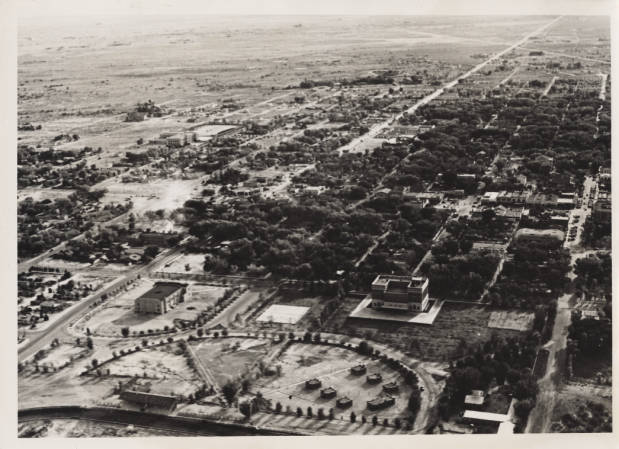
Early Las Vegas had a well-known red-light district commonly known as Block 16. Located near the city’s original downtown, it became part of the landscape as Las Vegas grew from a railroad town into a regional center. Like similar districts throughout the American West, it reflected the realities of a rapidly expanding frontier community rather than the image most people associate with Las Vegas today.
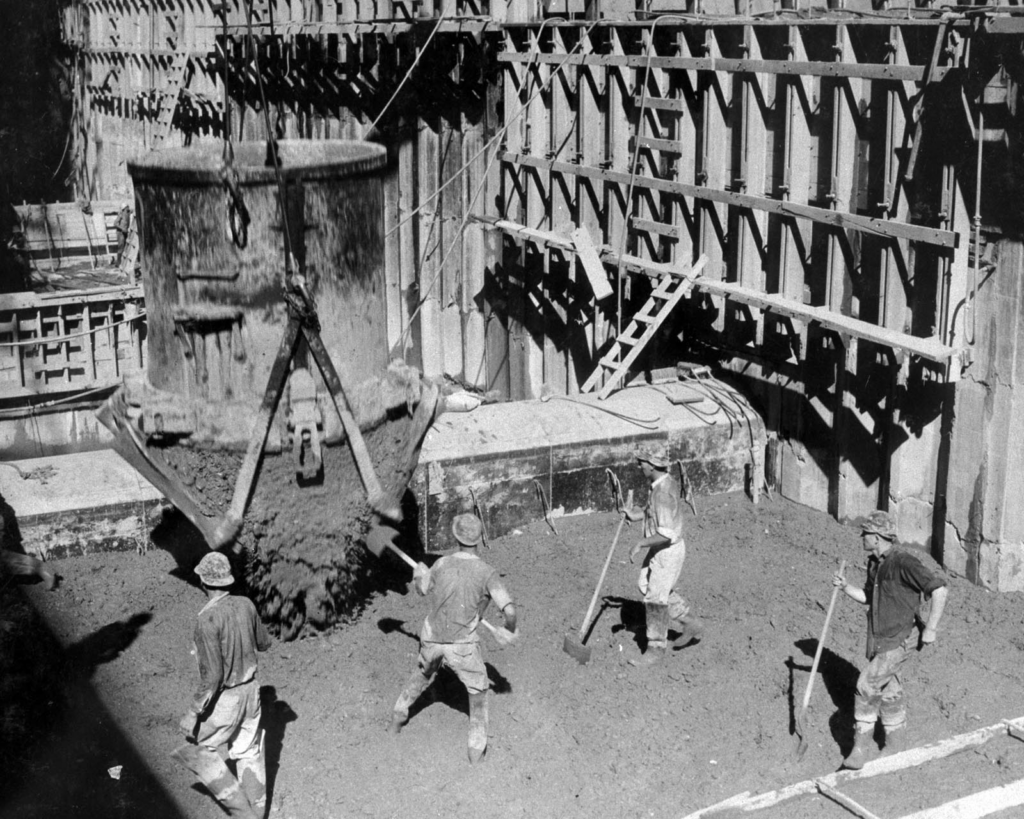
Construction of Hoover Dam during the 1930s transformed Southern Nevada. Thousands of workers arrived, businesses expanded, and Las Vegas changed almost overnight.
At the time, few people could have predicted that Las Vegas and the rest of Nevada were about to take very different paths.
World War II Marked a Turning Point
The Second World War changed the conversation in Las Vegas.
Across the United States, military officials sought to reduce prostitution near military installations because of concerns about troop health and military readiness. Communities with nearby bases faced increasing pressure to close long-established red-light districts.
Against that backdrop, Block 16 closed in 1942.
Its closure did not end prostitution in Nevada, but it did mark the end of Las Vegas’ historic red-light district. As the city continued growing after the war, it increasingly defined itself through legal gambling, entertainment, hospitality, and tourism rather than organized vice districts.
History had taken another path.
Rural Nevada Chose a Different Direction
While Las Vegas moved away from its historic red-light district, many rural communities continued treating prostitution as a matter of local government.
This is another place where Nevada’s history is often oversimplified.
Nevada did not suddenly “create” legal brothels in 1971.
Brothels had existed in parts of rural Nevada for many years under varying local conditions. What changed during the early 1970s was the emergence of a modern licensing framework.
Storey County became an important part of that story when it adopted one of Nevada’s first modern brothel licensing ordinances, a development widely associated with Mustang Ranch owner Joe Conforte. The ordinance helped formalize county oversight of an industry that had long existed rather than introducing something entirely new.
It’s an important distinction.
The story isn’t about the beginning of prostitution in Nevada.
It’s about the beginning of Nevada’s modern regulatory system.
The Legislature Drew a Line
As rural counties developed licensing systems, Nevada lawmakers faced a practical question.
Should every county be allowed to license brothels?
The Legislature ultimately chose a different approach.
Nevada adopted a county-option framework while prohibiting brothel licensing in counties above a specified population threshold. At the time, that effectively excluded Clark County. Although the population threshold has changed over the years as Nevada has grown, the practical result has remained the same.
Licensed brothels cannot legally operate in Clark County today.
That’s why visitors won’t find a licensed bawdy house in Las Vegas.
Because Nevada law treats Clark County differently from much of rural Nevada.
Two Different Futures
By the second half of the twentieth century, Las Vegas and rural Nevada were evolving in very different ways.
Las Vegas became one of the world’s leading entertainment destinations, known for its resorts, conventions, restaurants, professional sports, and casinos.
Meanwhile, licensed brothels in rural counties continued evolving within Nevada’s legal framework. Many expanded beyond the image of small frontier establishments, incorporating lodging, transportation, dining, and hospitality into destination properties designed for visitors seeking a legal experience outside Clark County.
That evolution continues today.
Visitors from around the world often arrive in Las Vegas expecting to find legal brothels on the Strip. Instead, those who choose to experience Nevada’s licensed brothel industry travel into neighboring rural counties, where local governments followed a different historical path decades ago.
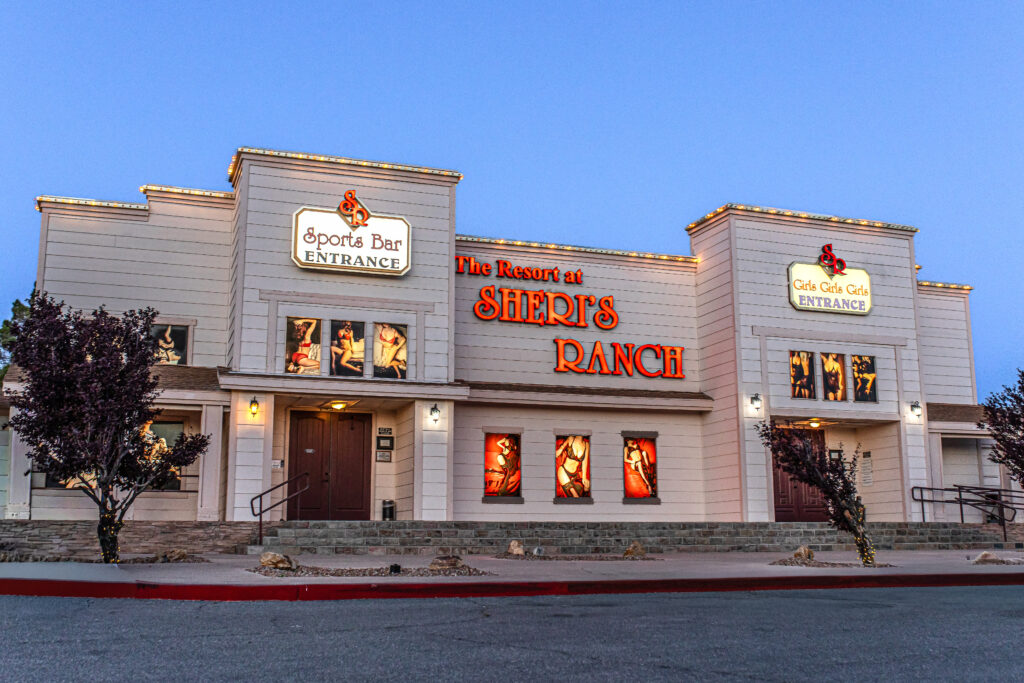
Resort-style properties such as Sheri’s Ranch in Nye County are part of that continuing story. Located just about an hour from the Las Vegas Strip, they reflect the evolution of an industry that developed under county regulation while Las Vegas pursued a very different identity.
In the end, the history of prostitution in Nevada is the story of how law, geography, politics, and local communities shaped a state that chose its own path, leaving Nevada with one of the most distinctive legal and cultural identities in America.
Further Reading
If you’d like to explore this chapter of Nevada history in greater depth, these are excellent places to begin:
- Nevada Revised Statutes – Chapter 244 (County Government & Brothel Licensing)
https://www.leg.state.nv.us/NRS/NRS-244.html
- Nevada Public Radio – Nevada Yesterdays: “A Brief History of Brothels in Nevada”
By historian Michael Green
https://knpr.org/show/nevada-yesterdays/2021-02-27/nevada-yesterdays
- UNLV William S. Boyd School of Law – How Nevada’s Prostitution Laws Serve Public Policy, and How Those Laws May Be Improved
https://scholars.law.unlv.edu/nlj/vol6/iss1/12/
- Guy Louis Rocha – Historical Presentations to the Nevada Legislature (PDF)
https://www.leg.state.nv.us/assembly/wp-content/uploads/2019/04/Guy-Rocha-Combined-Presentations-2003-2011.pdf
- UNLV Center for Democratic Culture – Sex Industry and Sex Workers in Nevada
Rachel T. Macfarlane, Celene Fuller, Chris Wakefield & Barbara G. Brents (2017)
https://oasis.library.unlv.edu/social_health_nevada_reports/57/
- Barbara G. Brents – UNLV Faculty Profile & Research
https://www.unlv.edu/news/expert/barbara-g-brents
- PBS American Experience – Las Vegas Timeline
https://www.pbs.org/wgbh/americanexperience/features/lasvegas-timeline/
Editorial Note
Historical facts in this article are drawn from Nevada statutes, academic research, historical publications, and the work of respected Nevada historians. The narrative structure and conclusions connecting those documented events are the author’s interpretation of the historical record.
Photo: Clément Bardot / Wikimedia Commons (CC BY-SA 3.0)